Myrrh and Frankincense Explained: What They Are, Where They Come From
What myrrh and frankincense are, which trees they come from, how the resin is collected, and how both were traded across the ancient world. History only, no health claims.
Myrrh and Frankincense Explained: What They Are, Where They Come From
Myrrh and frankincense are both tree resins: sap that seeps from the bark of small desert trees and hardens in the air. Myrrh comes from trees of the genus Commiphora and frankincense from trees of the genus Boswellia. Both grow around the Horn of Africa and the southern Arabian Peninsula, and both have been collected, traded and burned as incense for thousands of years.
Most of us know the two names from the Christmas story and little else. This guide covers what they are, how they differ, and how they travelled from a few dry hillsides to the rest of the world. It is a history and culture piece. It makes no health claims, and the last section explains why.
What is myrrh?
Myrrh is a gum resin from a few small, thorny tree species in the Commiphora genus. The best known, Commiphora myrrha, is native to Somalia and Somaliland, Oman, Yemen, Eritrea, the Somali Region of Ethiopia and parts of Saudi Arabia.
Harvesters cut the bark so that the gum bleeds out. It is waxy and sets quickly. The hardened lumps, traditionally called tears, are yellow to reddish-brown, turn hard and glossy, and darken as they age.
The name goes back to a Semitic root meaning “bitter”; Britannica gives the Arabic word as murr. In Chinese it is written 没药.
What is frankincense?
Frankincense, also called olibanum, is the resin of Boswellia trees, most famously Boswellia sacra. The tree is small and gives off an aromatic resin when its bark is cut. In Chinese it is 乳香.
Today Somalia has the largest frankincense forests, and Oman's Dhofar region is the place most closely tied to its history.
Frankincense vs myrrh at a glance
| Myrrh | Frankincense | |
|---|---|---|
| Tree | Commiphora species, small and thorny | Boswellia species, such as Boswellia sacra |
| Plant family | Burseraceae | Burseraceae |
| Where it grows | Horn of Africa and southern Arabia | Horn of Africa and southern Arabia, notably Somalia and Oman |
| Other names | From a Semitic root meaning “bitter”; 没药 | Olibanum; 乳香 |
| How it is collected | Bark is cut and the gum hardens into tears | Bark is cut and the resin is gathered |
The two are botanical cousins from the same plant family, grow in the same dry regions and were carried along the same roads. That is why they are so often named together.
How the ancient world used them
- Egypt. An expedition sent by King Sahure of the Fifth Dynasty to the land of Punt, in the Horn of Africa, brought back large quantities of myrrh and frankincense. Myrrh was also used, together with natron, in embalming.
- Temple incense. Myrrh was an ingredient of the incense burned in the First and Second Temples in Jerusalem, and of the holy anointing oil. The Hebrew Bible mentions it as a rare perfume.
- The gifts of the Magi. In the New Testament, gold, frankincense and myrrh are the three gifts brought to the infant Jesus, which is how both resins entered the Christmas story.
- Churches today. Myrrh is still used as incense in some Christian liturgies.
The trade that carried them
Because the trees grow in so few places, the resins had to travel. In the 1st century BC the Greek historian Diodorus Siculus recorded myrrh moving from southern Arabia by Nabataean caravans and sea ports to Petra, and from there around the Mediterranean. Petra's position let the Nabataeans control that trade.
Oman still keeps part of this story on the ground. The Land of Frankincense in Dhofar has been a UNESCO World Heritage Site since 2000; it was first listed as the Frankincense Trail and renamed in 2005. It takes in four places: the frankincense trees of Wadi Dawkah, the caravan oasis of Shisr, and the ports of Khor Rori and Al-Baleed. UNESCO describes frankincense as one of the most important luxury trade goods of antiquity.
Myrrh and frankincense today
Both resins are still harvested by hand in much the same way. Britannica notes that myrrh has long been used as a flavouring and in cosmetics, and both remain familiar ingredients in incense and perfumery. You will also find them listed among the ingredients of some massage oils and balms, including ours.
For other ideas for parents and grandparents, see our gift ideas for elderly parents in Singapore and, in Chinese, the Chong Yang gift guide.
What history does not tell us
A long history of use is not the same as evidence that something works. People have valued these resins for their scent, their rarity and their place in ritual, and that is what the historical record shows. It does not show what they do for the body, so this article does not say.
Frequently asked questions
Are myrrh and frankincense the same thing?
No. Both are tree resins from the same plant family, but myrrh comes from Commiphora trees and frankincense from Boswellia trees.
Where does myrrh come from?
From small, thorny Commiphora trees. The main species is native to Somalia and Somaliland, Oman, Yemen, Eritrea, part of Ethiopia and parts of Saudi Arabia.
Why is it called myrrh?
The name comes from a Semitic root meaning “bitter”. Britannica gives the Arabic word as murr.
What is the Land of Frankincense?
A UNESCO World Heritage Site in Dhofar, Oman, listed in 2000. It covers the frankincense trees of Wadi Dawkah, the caravan oasis of Shisr and the old ports of Khor Rori and Al-Baleed.
What are myrrh and frankincense called in Chinese?
Myrrh is 没药 and frankincense is 乳香.
Sources
This article is general information, not medical advice. If pain persists or gets worse, or comes with swelling or fever, please see a doctor.
了解更多疼痛问题Explore more pain points
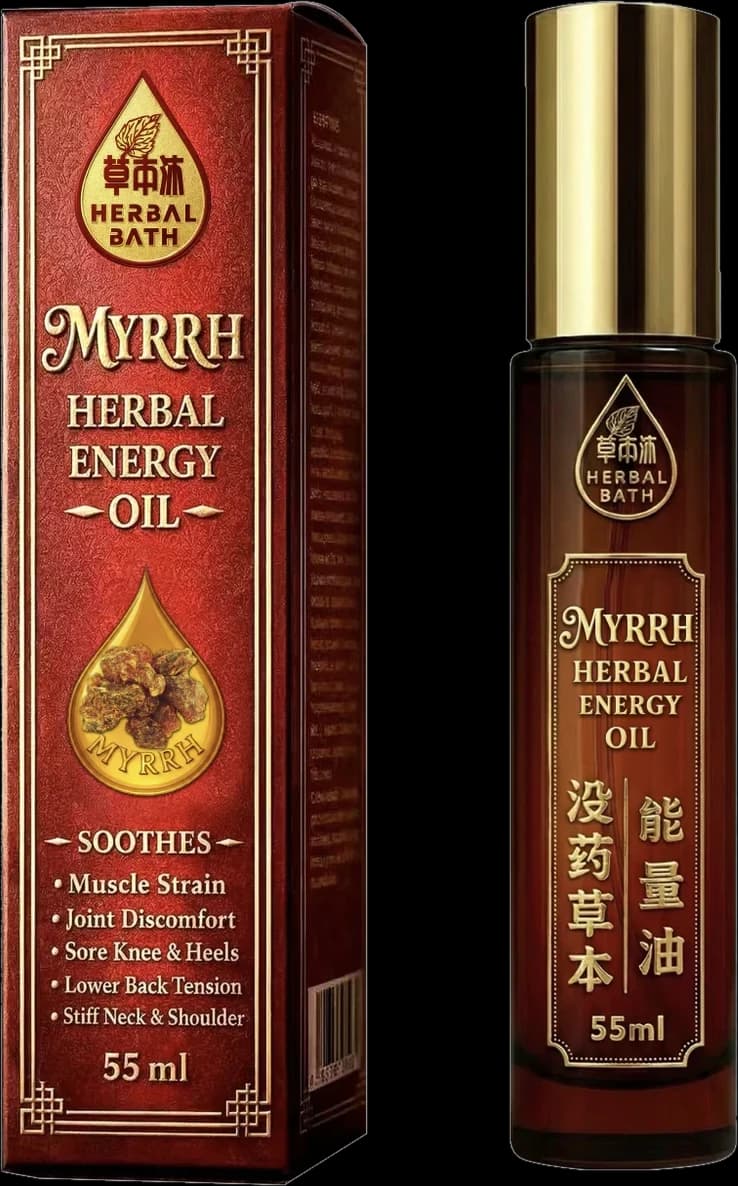
Curious about the warmth of myrrh?
HerbalBath Myrrh Spray: warmth in 10 seconds, and one bottle lasts 3-4 months. A set of 4 bottles is S$117, delivery included.
相关文章Related Articles
Gift Ideas for Elderly Parents in Singapore: 10 They'll Actually Use
Practical gifts for elderly parents and grandparents in Singapore, from subsidised HDB safety upgrades to free Active Ageing Centre classes, plus gift etiquette worth knowing.
重阳节送什么给长辈?新加坡孝心礼物指南(2026)
2026年重阳节是10月18日。这份指南整理了8个实用又贴心的礼物点子、送礼禁忌,以及不能回家时表达心意的方法,帮你挑到长辈真正用得上的礼物。
针灸、推拿、止痛药、物理治疗... 面对五花八门的治疗方案,您该如何选择?本文为您深入分析中西疗法的利弊。